
What is a SWOT analysis? It’s a cornerstone of strategic planning, a framework designed to help businesses navigate the complexities of the market. This analytical tool allows organizations to dissect their internal and external environments, offering a comprehensive understanding of their position and future prospects.
The SWOT framework, encompassing Strengths, Weaknesses, Opportunities, and Threats, is more than just a checklist; it’s a dynamic process. It involves a detailed examination of a company’s internal capabilities and limitations (Strengths and Weaknesses) alongside an assessment of the external environment, including market trends, competition, and regulatory changes (Opportunities and Threats). This in-depth analysis provides a foundation for informed decision-making, strategic planning, and resource allocation, making it an indispensable tool for businesses of all sizes striving for sustainable growth.
Understanding the Fundamental Concepts of a Strengths Weaknesses Opportunities and Threats assessment is crucial for strategic planning.
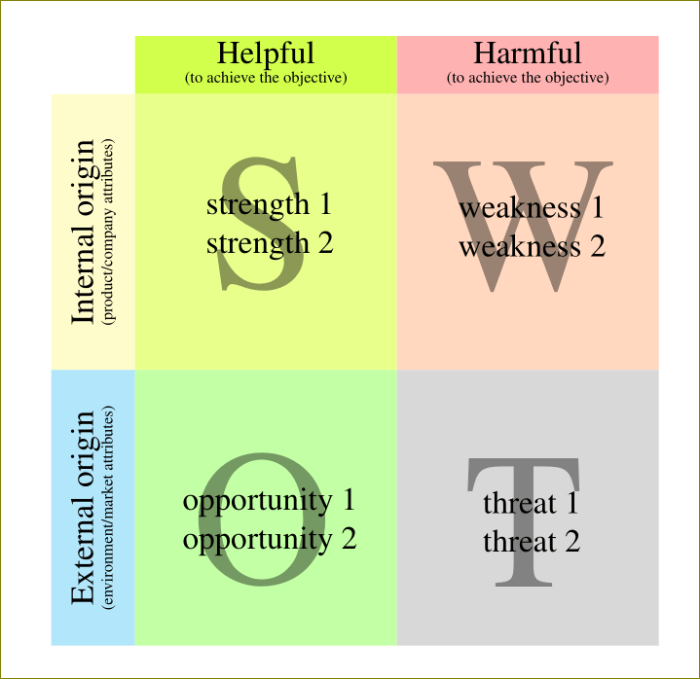
Strategic planning relies heavily on a thorough understanding of an organization’s internal and external environments. The Strengths, Weaknesses, Opportunities, and Threats (SWOT) analysis provides a structured framework for this assessment, offering valuable insights that inform decision-making and drive strategic initiatives. This comprehensive evaluation is not merely an academic exercise; it’s a vital tool for businesses of all sizes, enabling them to navigate the complexities of the market and achieve sustainable growth.
Core Components of the SWOT Assessment Framework
The SWOT analysis is a foundational strategic planning tool, helping organizations to evaluate their position in the market. This framework encompasses two key categories: internal factors (Strengths and Weaknesses) and external factors (Opportunities and Threats). Each component requires careful consideration and objective evaluation to ensure the analysis provides actionable insights.
- Strengths: These are the internal capabilities and resources that give an organization a competitive advantage. Identifying strengths involves recognizing what the company does well and what sets it apart from its competitors. This could include a strong brand reputation, a skilled workforce, proprietary technology, or a loyal customer base.
- Weaknesses: These are internal limitations that hinder an organization’s performance. Weaknesses represent areas where the company needs improvement. Examples include outdated technology, a lack of financial resources, poor management, or inefficient processes.
- Opportunities: These are external factors that could benefit the organization. Opportunities often arise from changes in the market, emerging trends, or unmet customer needs. Identifying opportunities requires analyzing the external environment for potential growth areas. This might include new markets, technological advancements, or changes in government regulations.
- Threats: These are external factors that could harm the organization. Threats are potential challenges that could negatively impact the company’s performance. This might include increased competition, economic downturns, changes in consumer preferences, or new government regulations.
Applying the SWOT Framework to a Hypothetical Business Scenario
To illustrate how the SWOT framework works, consider a hypothetical organic food delivery service, “FreshHarvest.” Applying the framework would involve the following considerations:
- Strengths:
- Strong brand reputation for freshness and sustainability.
- Established relationships with local organic farmers.
- Efficient delivery logistics within a defined geographic area.
- Weaknesses:
- Limited geographic reach.
- Higher prices compared to conventional food delivery services.
- Dependence on third-party delivery personnel.
- Opportunities:
- Growing consumer demand for organic and healthy food options.
- Expansion into new geographic markets.
- Partnerships with corporate wellness programs.
- Threats:
- Increased competition from established food delivery services.
- Fluctuations in the prices of organic produce.
- Potential changes in government regulations regarding food safety.
Benefits of Utilizing the SWOT Assessment
The SWOT analysis offers several advantages for businesses, irrespective of their size. By providing a clear and concise overview of the organization’s internal and external environments, the SWOT analysis facilitates more informed decision-making and helps businesses achieve their strategic goals.
- Strategic Planning: The SWOT analysis provides a solid foundation for developing effective strategic plans. It helps businesses identify key areas for improvement, capitalize on opportunities, and mitigate potential threats.
- Resource Allocation: By identifying strengths and weaknesses, the SWOT analysis helps businesses allocate resources more effectively. Companies can focus on leveraging their strengths and addressing their weaknesses to improve efficiency and profitability.
- Risk Management: The SWOT analysis enables businesses to identify and assess potential risks. This allows them to develop strategies to mitigate these risks and minimize their negative impact.
- Competitive Advantage: By understanding their strengths and weaknesses relative to their competitors, businesses can develop strategies to gain a competitive advantage. This may involve focusing on their strengths, differentiating their products or services, or improving their market position.
- Improved Decision-Making: The SWOT analysis provides a framework for making more informed decisions. By considering both internal and external factors, businesses can make decisions that are more likely to lead to success.
Identifying Internal Factors such as Strengths and Weaknesses requires a thorough examination of a company’s internal capabilities and limitations.
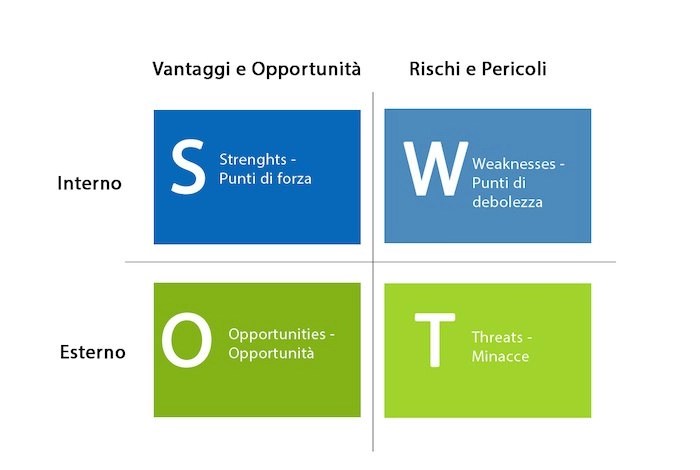
Understanding a company’s internal landscape is paramount to strategic planning. A SWOT analysis delves into these internal factors, evaluating a company’s strengths and weaknesses to provide a clear picture of its internal capabilities. This assessment informs strategic decisions, enabling companies to leverage their advantages and mitigate their disadvantages effectively. This section explores how to identify and evaluate these crucial internal elements.
Identifying and Evaluating Company Strengths
Identifying a company’s strengths involves a detailed examination of its internal resources, core competencies, and competitive advantages. These strengths represent the firm’s capabilities and assets that give it an edge over competitors. A thorough evaluation of these strengths is essential for formulating effective strategies.
The following bullet points Artikel key areas to consider when identifying and evaluating a company’s strengths:
- Resources: These are the assets a company owns or has access to. Evaluating resources involves assessing their availability, quality, and strategic importance.
- Financial Resources: This includes cash reserves, access to capital, and strong financial performance. For example, Apple’s substantial cash reserves and high profitability contribute significantly to its ability to invest in research and development and expand into new markets.
- Physical Resources: This encompasses the company’s facilities, equipment, and raw materials. Consider the location, condition, and capacity of these resources. For instance, Amazon’s extensive network of fulfillment centers gives it a significant advantage in order fulfillment and delivery speed.
- Human Resources: This refers to the skills, experience, and knowledge of the company’s employees. A highly skilled and motivated workforce can be a major strength. Google’s ability to attract and retain top engineering talent is a critical strength, fueling its innovation in software and technology.
- Intellectual Property: Patents, trademarks, copyrights, and trade secrets are valuable assets. Coca-Cola’s proprietary formula is a core strength, protecting its brand and market position.
- Competencies: These are the company’s core capabilities and skills. Evaluating competencies involves understanding what the company does particularly well.
- Operational Excellence: This is the ability to efficiently and effectively manage operations, such as manufacturing, logistics, and customer service. Toyota’s reputation for operational efficiency and its just-in-time inventory system are prime examples.
- Innovation: This involves the ability to develop new products, services, and processes. Tesla’s continuous innovation in electric vehicle technology is a significant strength.
- Marketing and Sales: This encompasses the company’s ability to effectively market and sell its products or services. Nike’s strong brand recognition and marketing prowess are key to its success.
- Customer Service: Exceptional customer service can build customer loyalty and positive brand perception. Zappos’s commitment to outstanding customer service is a competitive advantage.
- Competitive Advantages: These are the factors that give the company an edge over its competitors. Evaluating competitive advantages requires analyzing how the company differentiates itself in the market.
- Brand Recognition: A strong brand can create customer loyalty and attract new customers. Coca-Cola’s global brand recognition is a significant advantage.
- Cost Leadership: Offering products or services at a lower cost than competitors can attract price-sensitive customers. Walmart’s focus on cost leadership is a key strength.
- Differentiation: Offering unique products or services can create a competitive advantage. Apple’s product design and user experience are examples of differentiation.
- Distribution Channels: Effective distribution channels ensure products or services reach customers efficiently. Amazon’s vast distribution network is a significant advantage.
Identifying and Assessing Company Weaknesses
Identifying a company’s weaknesses involves a critical assessment of its internal limitations and areas needing improvement. These weaknesses can hinder the company’s performance and make it vulnerable to competition. A realistic evaluation of weaknesses is crucial for developing strategies to overcome them.
The following bullet points provide examples of weaknesses to consider when assessing a company:
- Lack of Resources: This can include insufficient financial resources, outdated physical resources, or a shortage of skilled employees.
- Poor Management: Ineffective leadership, poor decision-making, and lack of strategic planning can be significant weaknesses.
- Outdated Technology: Using outdated technology can lead to inefficiencies, higher costs, and reduced competitiveness.
- Weak Brand Reputation: A negative brand image or lack of brand recognition can deter customers.
- High Costs: High production costs, operational inefficiencies, or excessive overhead can reduce profitability.
- Inefficient Processes: Slow processes, bottlenecks, and lack of automation can lead to delays and increased costs.
- Limited Market Reach: Inability to effectively reach target customers or penetrate new markets.
- Poor Customer Service: Dissatisfied customers and negative reviews can damage brand reputation and lead to lost sales.
Contrasting Strengths and Weaknesses
The following table illustrates the key differences between strengths and weaknesses, providing a contrasting perspective to aid in the analysis.
| Feature | Strength | Weakness |
|---|---|---|
| Definition | Internal capabilities that give a company an advantage. | Internal limitations that hinder a company’s performance. |
| Impact | Drives competitive advantage, improves performance, and enhances profitability. | Limits competitive advantage, reduces performance, and increases vulnerability. |
| Focus | Leveraging existing capabilities and assets. | Addressing internal limitations and deficiencies. |
| Examples | Strong brand recognition, innovative products, efficient operations. | Limited financial resources, outdated technology, poor customer service. |
Examining External Factors like Opportunities and Threats helps businesses understand the external environment and its impact.
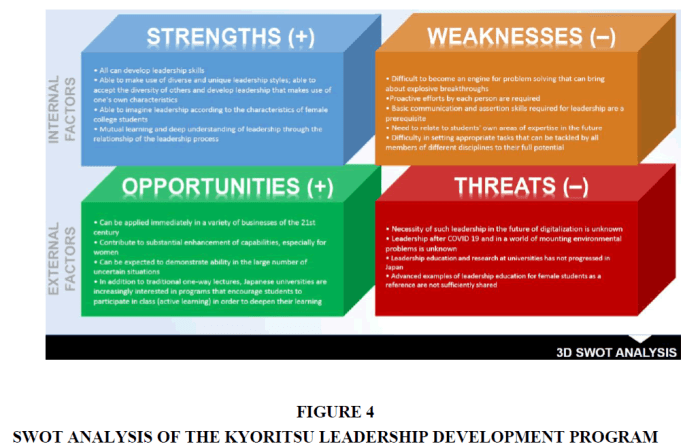
Understanding the external environment is crucial for a comprehensive SWOT analysis. This involves scrutinizing factors beyond a company’s direct control that can significantly impact its performance. These external elements can present both opportunities for growth and threats that could undermine the business.
Identifying and Analyzing External Opportunities
Businesses must actively seek and analyze external opportunities to identify potential areas for expansion and competitive advantage. This involves understanding market trends, technological advancements, and evolving customer preferences.
- Market Trends: Businesses should monitor broader market shifts that can be leveraged.
- Increasing Demand for Sustainable Products: Consumers are increasingly prioritizing environmentally friendly options. Companies offering sustainable products or practices can capitalize on this trend, as seen with the growth of electric vehicle manufacturers.
- Growth of E-commerce: The rise of online shopping provides opportunities for businesses to reach wider audiences and expand their market reach, illustrated by the success of online retailers.
- Expansion into Emerging Markets: Targeting new geographical markets with high growth potential, like the Asia-Pacific region, can lead to substantial revenue increases.
- Technological Advancements: Businesses must stay abreast of technological changes to remain competitive. The adoption of AI, automation, and cloud computing can streamline operations and create new product offerings.
- Changing Customer Preferences: Businesses must adapt to shifting customer needs and desires. This involves understanding consumer behavior, personalization, and the demand for customized products and services.
Identifying and Evaluating External Threats
Businesses must identify and evaluate external threats to mitigate risks and develop effective strategies for survival and resilience. This includes understanding competitive pressures, economic conditions, and regulatory changes.
- Competitive Pressures: The actions of competitors can pose significant threats. Analyzing competitor strategies, product offerings, and market share is essential.
- Economic Downturns: Economic recessions can lead to decreased consumer spending and reduced demand for products and services. Businesses should prepare for economic volatility.
- Regulatory Changes: Businesses must comply with evolving laws and regulations.
- Increased Environmental Regulations: Stricter environmental standards can increase production costs.
- Changes in Data Privacy Laws: Companies must adapt to evolving regulations such as GDPR or CCPA to protect consumer data and avoid penalties.
- Trade Restrictions and Tariffs: These can impact the cost of goods and supply chains.
External factors significantly influence a business’s trajectory. For instance, a surge in demand for renewable energy sources presents a substantial opportunity for companies in the solar panel industry. This trend, driven by environmental concerns and government incentives, can fuel rapid growth and market expansion.
Conversely, a sudden economic downturn, characterized by rising inflation and decreased consumer spending, can severely threaten businesses. Retailers, for example, might experience a decline in sales as consumers reduce discretionary spending, necessitating cost-cutting measures and strategic adjustments to weather the economic storm.
Moreover, regulatory changes can reshape the business landscape. New data privacy regulations, such as the General Data Protection Regulation (GDPR), require companies to invest in data protection measures. While compliance can be costly, it also builds customer trust and reduces the risk of legal penalties, ultimately impacting a company’s operational strategies.
Conducting a comprehensive Assessment involves a structured approach to gather and analyze information effectively.
Conducting a SWOT analysis requires a systematic and disciplined approach. This structured process ensures that the gathered information is accurate, relevant, and useful for strategic decision-making. A well-executed assessment provides a clear picture of the internal and external environments, enabling businesses to capitalize on their strengths, mitigate weaknesses, seize opportunities, and defend against threats.
Step-by-Step Process of Conducting an Assessment
The assessment process involves several critical steps, from data collection to interpretation. Each step plays a crucial role in the overall effectiveness of the SWOT analysis.
- Define the Scope and Objectives: Clearly Artikel the goals of the SWOT analysis. Determine what specific questions the analysis aims to answer and which areas of the business will be examined. For instance, is the analysis focused on a new product launch, market expansion, or internal restructuring?
- Data Collection: Gather information from various sources, both internal and external. This includes financial reports, market research data, customer feedback, competitor analysis, and industry reports. Consider both primary and secondary data sources.
- Internal Analysis: Evaluate the company’s internal strengths and weaknesses. This involves assessing resources, capabilities, core competencies, and areas where the company falls short. Examples include assessing financial health, operational efficiency, and employee skills.
- External Analysis: Examine the external environment to identify opportunities and threats. This includes analyzing market trends, competitive landscape, regulatory changes, and economic conditions. Tools like PESTLE analysis can be used to understand the broader external context.
- Data Analysis: Organize and analyze the collected data. Identify patterns, trends, and key insights. Use various analytical techniques, such as statistical analysis, qualitative analysis, and SWOT matrix creation.
- SWOT Matrix Creation: Construct the SWOT matrix to visually represent the findings. The matrix typically includes four quadrants: Strengths, Weaknesses, Opportunities, and Threats. Each quadrant should be populated with specific, concise, and actionable points.
- Prioritization: Determine the relative importance of each factor within the SWOT matrix. Focus on the most critical strengths, weaknesses, opportunities, and threats that have the greatest impact on the business.
- Strategy Development: Develop strategic recommendations based on the SWOT analysis. This involves leveraging strengths, addressing weaknesses, capitalizing on opportunities, and mitigating threats.
- Implementation and Monitoring: Implement the strategic recommendations and continuously monitor progress. Track key performance indicators (KPIs) to measure the effectiveness of the strategies and make adjustments as needed.
Comparison of Primary and Secondary Data Sources
Understanding the differences between primary and secondary data sources is crucial for effective data collection. Each type of source offers unique benefits and limitations.
| Data Source | Description | Uses | Advantages | Disadvantages |
|---|---|---|---|---|
| Primary Data | Data collected directly for the specific purpose of the SWOT analysis. | Gathering specific information about customer preferences, employee feedback, or competitor strategies. |
|
|
| Secondary Data | Data that already exists, collected by others for a different purpose. | Market research reports, industry publications, government statistics, and competitor analysis. |
|
|
Prioritizing Findings for Decision-Making
Prioritizing the findings from a SWOT analysis is crucial for focusing on the most critical factors that will drive strategic decisions. A prioritization matrix can be used to assess the impact and likelihood of each factor.
For example, a hypothetical technology company, “InnovateTech,” might conduct a SWOT analysis. Here’s how they could prioritize their findings:
- Strengths: Strong brand reputation, innovative product development, and a loyal customer base.
- Weaknesses: High employee turnover, limited marketing budget, and dependence on a single key supplier.
- Opportunities: Growing market demand for cloud-based services, potential partnerships with complementary businesses, and government incentives for sustainable technology.
- Threats: Increasing competition from larger tech companies, economic downturn impacting customer spending, and rapid technological advancements rendering existing products obsolete.
Prioritization involves assessing the impact and likelihood of each factor.
- High Priority: Strong brand reputation (Strength) combined with the growing market demand for cloud-based services (Opportunity). These represent areas where InnovateTech can focus its resources and investments.
- Medium Priority: Dependence on a single key supplier (Weakness) and increasing competition (Threat). Addressing the supplier dependence and differentiating its product are important, but not immediately critical.
- Low Priority: High employee turnover (Weakness) and rapid technological advancements (Threat). These are important to address, but may not be as pressing in the short term.
By prioritizing these factors, InnovateTech can focus its strategic planning on leveraging its strengths and capitalizing on opportunities while addressing its weaknesses and mitigating threats. For instance, InnovateTech might allocate more resources to marketing their cloud services to take advantage of the growing market demand, while simultaneously exploring alternative suppliers to reduce their reliance on a single source. This strategic approach ensures that the company is allocating its resources effectively and making informed decisions based on the most critical factors identified in the SWOT analysis.
Utilizing the Results for Strategic Decision-Making is the ultimate goal of the entire process.
Strategic planning hinges on a deep understanding of a company’s position within its competitive landscape. A comprehensive Strengths, Weaknesses, Opportunities, and Threats (SWOT) analysis provides the critical insights necessary to make informed decisions that drive growth, improve efficiency, and mitigate risks. The assessment acts as a roadmap, guiding the organization toward its objectives.
Informing Strategic Planning with SWOT Insights
The insights derived from a SWOT analysis are invaluable for strategic planning. This process involves goal setting, strategy formulation, and resource allocation, all of which are significantly influenced by the understanding gained from the assessment.
- Goal Setting: A SWOT analysis helps define realistic and achievable goals. By identifying strengths, businesses can leverage them to pursue ambitious objectives. Recognizing weaknesses allows companies to set goals that address these limitations. Understanding opportunities enables businesses to set goals that capitalize on favorable market conditions. Identifying threats prompts the setting of goals that mitigate potential negative impacts.
- Strategy Formulation: The analysis informs the selection of the most appropriate strategies. A company can use its strengths to pursue opportunities (the SO strategy). It can also address its weaknesses to take advantage of opportunities (the WO strategy). Similarly, the company can utilize its strengths to avoid threats (the ST strategy), or it can minimize weaknesses and avoid threats (the WT strategy).
- Resource Allocation: A SWOT analysis provides a clear understanding of where to allocate resources effectively. By knowing its strengths, a company can invest in areas where it already excels. Identifying weaknesses helps businesses prioritize resource allocation to address these deficiencies. Recognizing opportunities allows for strategic investment to capitalize on favorable market conditions. Understanding threats guides the allocation of resources to mitigate potential risks and protect the business.
Leveraging Strengths, Capitalizing on Opportunities, Mitigating Weaknesses and Threats
Businesses can strategically utilize the insights from their SWOT analysis to maximize their potential. This involves proactively leveraging strengths, capitalizing on opportunities, mitigating weaknesses, and minimizing threats.
- Leveraging Strengths and Capitalizing on Opportunities: Consider a software company with a strong reputation for innovation (strength) and an emerging market for cloud-based solutions (opportunity). The company can leverage its innovative capabilities to develop and market a cutting-edge cloud-based software product. This SO strategy allows the company to capitalize on a growing market while reinforcing its position as a leader in innovation.
- Mitigating Weaknesses and Capitalizing on Opportunities: A retail company might identify a weakness in its online presence (weakness) while recognizing a growing trend in online shopping (opportunity). The company can invest in improving its e-commerce platform, enhancing its online marketing, and streamlining its online order fulfillment processes. This WO strategy allows the company to address its weakness while capitalizing on the growth of online sales.
- Leveraging Strengths and Avoiding Threats: A manufacturing company might have a strong brand reputation and efficient production processes (strengths) while facing increasing competition from lower-cost manufacturers (threat). The company can leverage its brand reputation to differentiate its products and focus on premium markets. It can also utilize its efficient production processes to reduce costs and maintain competitiveness. This ST strategy allows the company to leverage its strengths to avoid the threat of increased competition.
- Mitigating Weaknesses and Avoiding Threats: A financial services company might have a weak cybersecurity infrastructure (weakness) while facing increasing cyber threats (threat). The company can invest in upgrading its cybersecurity systems, implementing robust data protection measures, and training its employees on cybersecurity best practices. This WT strategy allows the company to minimize its weakness and avoid the threat of cyberattacks.
Creating a Visual Representation of SWOT Results
A visual representation of the SWOT analysis results facilitates understanding and communication. A matrix format is particularly effective for this purpose.
SWOT Matrix Example:
The matrix is a 2×2 grid. The rows represent Internal Factors (Strengths and Weaknesses), and the columns represent External Factors (Opportunities and Threats).
Internal Factors:
- Strengths: List the company’s internal strengths, such as strong brand recognition, skilled workforce, efficient operations, and innovative products.
- Weaknesses: List the company’s internal weaknesses, such as outdated technology, limited financial resources, inefficient supply chain, and lack of market diversification.
External Factors:
- Opportunities: List the external opportunities, such as emerging market trends, new technologies, government incentives, and partnerships.
- Threats: List the external threats, such as increased competition, economic downturn, changing customer preferences, and regulatory changes.
Each cell of the matrix is populated with specific examples of how the company can leverage its strengths to capitalize on opportunities (SO), mitigate weaknesses to capitalize on opportunities (WO), leverage strengths to avoid threats (ST), and mitigate weaknesses to avoid threats (WT).
The resulting matrix provides a concise and easily understandable overview of the company’s strategic position, guiding decision-making and facilitating communication across the organization.
Last Recap
In essence, the SWOT analysis is a powerful compass guiding businesses through the ever-changing landscape of the market. By meticulously examining internal and external factors, organizations gain invaluable insights, enabling them to capitalize on opportunities, mitigate threats, and leverage their strengths while addressing weaknesses. The ultimate goal is to translate these insights into actionable strategies, driving informed decision-making, and fostering sustainable growth. Understanding and implementing a SWOT analysis is not merely an exercise; it’s a strategic imperative for any organization aiming for long-term success.
